
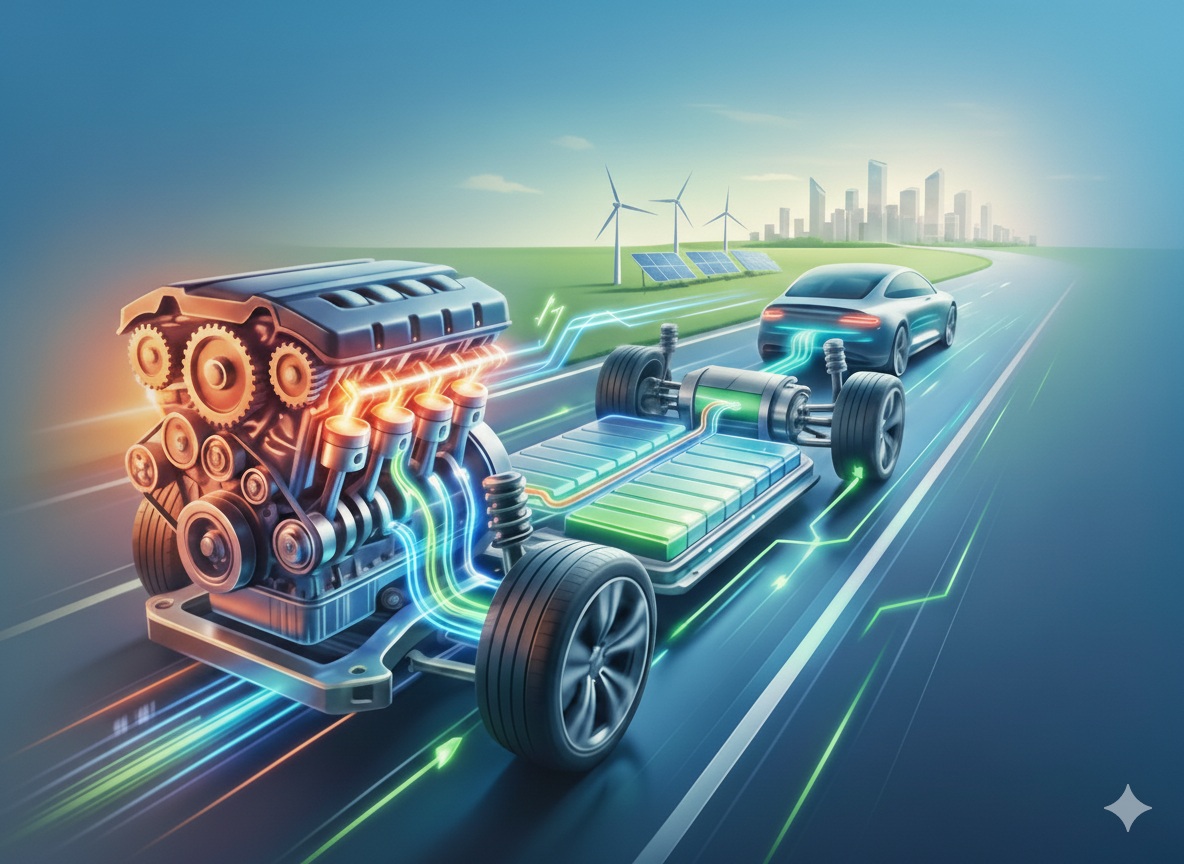
With the EU’s recent adjustment on the 2035 CO₂ reduction target from 100% to 90%, plug-in hybrids, range extenders, mild hybrids and certain ICE vehicles would not be automatically excluded from the EU market after 2035. Major EU OEMs are now moving ahead with strategies that reflect the softened regulatory landscape.
In our recent study, based on in-depth interviews with OEMs, Tier 1 suppliers, and engineering firms, we uncover the true engineering and investment roadmaps shaping the next decade—beyond political noise.
Here is what we found—and what it means for the supply chain:
- The “Polishing” era vs. “New Development”: Contrary to the belief that a softened target means a resurgence of engine innovation, our research confirms that the era of “clean sheet” ICE families is effectively over. Leading EU OEMs are not pouring capital into new engine blocks. Instead, the focus has shifted entirely to “polishing” existing architectures, through iterative improvements on thermal efficiencies, rather than new innovations.
- Cost is king: Despite massive R&D budgets already being redirected toward BEVs, investment in ICE has increased slightly more than expected, compared to 5 years ago. The direction for ICE is clear: reduce complexity and cost, leading to a consolidation of engine families.
- The hybrid “bridge” just got longer: The “90% target” effectively validates a strategy many OEMs were quietly preparing for: the extended relevance of HEV and PHEV. OEMs are refining their portfolios to ensure ICE powertrains to “bridge” towards electrification.
- The range extenders question: While REEVs are dominating in China, our interviews reveal a hesitant approach in Europe, where they will emerge but would remain a niche solution, despite their potential to solve the “range anxiety” gap.
- For Tier 1 suppliers: This shift presents a paradox, as volume for ICE components may persist longer than anticipated, but the demand for innovation has stalled. Winners will be those who can offer innovations like “plug-and-play” hybridization solutions and cost-down measures for legacy engines, rather than those pitching next-generation concepts, as EU is already ready for EUR 7.
The political landscape remains volatile, with debates over e-fuels and “carbon-correction factors” still ongoing. However, the engineering reality is set. The industry is moving toward a streamlined, BEVs and hybridized future where the combustion engine plays a supporting, not starring, role.
Are you interested in discussing this topic?
Please feel free to contact us:
Udita Chauhan
+49 6201 9915 69
Udita.Chauhan@SchlegelundPartner.de
© Schlegel und Partner 2026